
Flat Roofing Construction
Flat roofing is a popular construction method used in both residential and commercial buildings. Unlike pitched roofs, flat roofs are characterised by their nearly level surface, typically built with a slight incline (usually around 1-10 degrees) to allow for water drainage. Flat roofing construction requires careful design and expert installation to ensure durability, water resistance, and long-term performance.
GRP Flat Roof Installation
Looking for GRP flat roof installation that lasts? Our specialist team installs premium fibreglass (GRP) systems for extensions, garages, dormers and terraces. We build warm-roof or cold-roof setups, create correct falls for drainage, and finish with a seamless GRP laminate that’s tough, UV-resistant and easy to maintain. For a quick quote, call 020 3665 2220.
Fibreglass (GRP) roof installation: how we do it
-
Survey & design – moisture checks, falls, outlets and edge details planned properly.
-
Deck preparation – OSB3 or suitable deck fixed to spec; trims and drip/kerb edges set out.
-
GRP laminate – catalyst-controlled resin and reinforcement mat laid wet-on-wet for a monolithic, leak-free finish.
-
Topcoat – UV-stable topcoat in your chosen colour; anti-slip available for terraces.
Prefer American wording? We also handle fiberglass flat roof installation (same GRP system, US spelling).
Repairs & leak stopping: fibreglass and all flat roofs
Got a fibreglass roof leaking? We offer fibreglass roof repair and targeted fibreglass roof leak repair. If you’re searching flat roof repair near me, our rapid response team diagnoses blisters, pinholes, cracked trims and failed details, then restores watertight integrity. We also handle fiberglass flat roof repair requests. For larger issues, we’ll advise whether GRP roof repair or renewal is the most cost-effective route.
Recoating fibreglass roof (refurbishment)
Where structure and laminate are sound, recoating fibreglass roof surfaces can extend service life at lower cost. We abrade, clean, repair local defects and apply a compatible GRP topcoat system for fresh UV protection and a clean finish.
Commercial & industrial GRP
Need commercial flat roof contractors near me? We deliver GRP on schools, shops, small industrial units and office blocks, specifying trims, outlets and expansion details for scale. We also install liquid systems where detailing around plant is complex, and we’ll advise when single-ply or felt is the better fit.
Local specialists you can ring today
Searching flat roofers near me, flat roof contractors near me, flat roofing specialists near me, flat roofers in my area or flat roof contractors in my area? You’ve found us. We’re your local team for flat roof repair in my area, flat roof repair contractors near me, flat roof fitters near me and flat roof experts near me—ready to help with fast surveys and clear pricing. Call 020 3665 2220 or message us.
GRP roofing installation & materials options
As trusted GRP roofing contractors, we tailor grp roofing installation to your project: warm-roof build-ups that meet Part L, tapered insulation to create falls, anti-slip balcony finishes, and colour-matched trims. We’ll compare GRP with felt and single-ply so you get the right outcome, not just a product.
FAQs (GRP & flat roof searches we hear every day)
Do you offer a 10-year guarantee?
Yes—ask about our 10-year insurance-backed guarantee for new installs. It provides protection even if a contractor ceases trading. See our Insurance-Backed Roofing page for details. Richmond Roofing Group
What’s the typical GRP lifespan?
With correct design and maintenance, GRP is a long-term solution. We specify robust trims, adequate falls and expansion details to maximise durability.
Can you fix ponding and recurring leaks?
Yes. We address falls, outlets and detailing—not just the surface—so the repair lasts.
Do you work with felt and single-ply too?
We do. If GRP isn’t the best fit, we’ll price alternatives and explain pros/cons clearly.
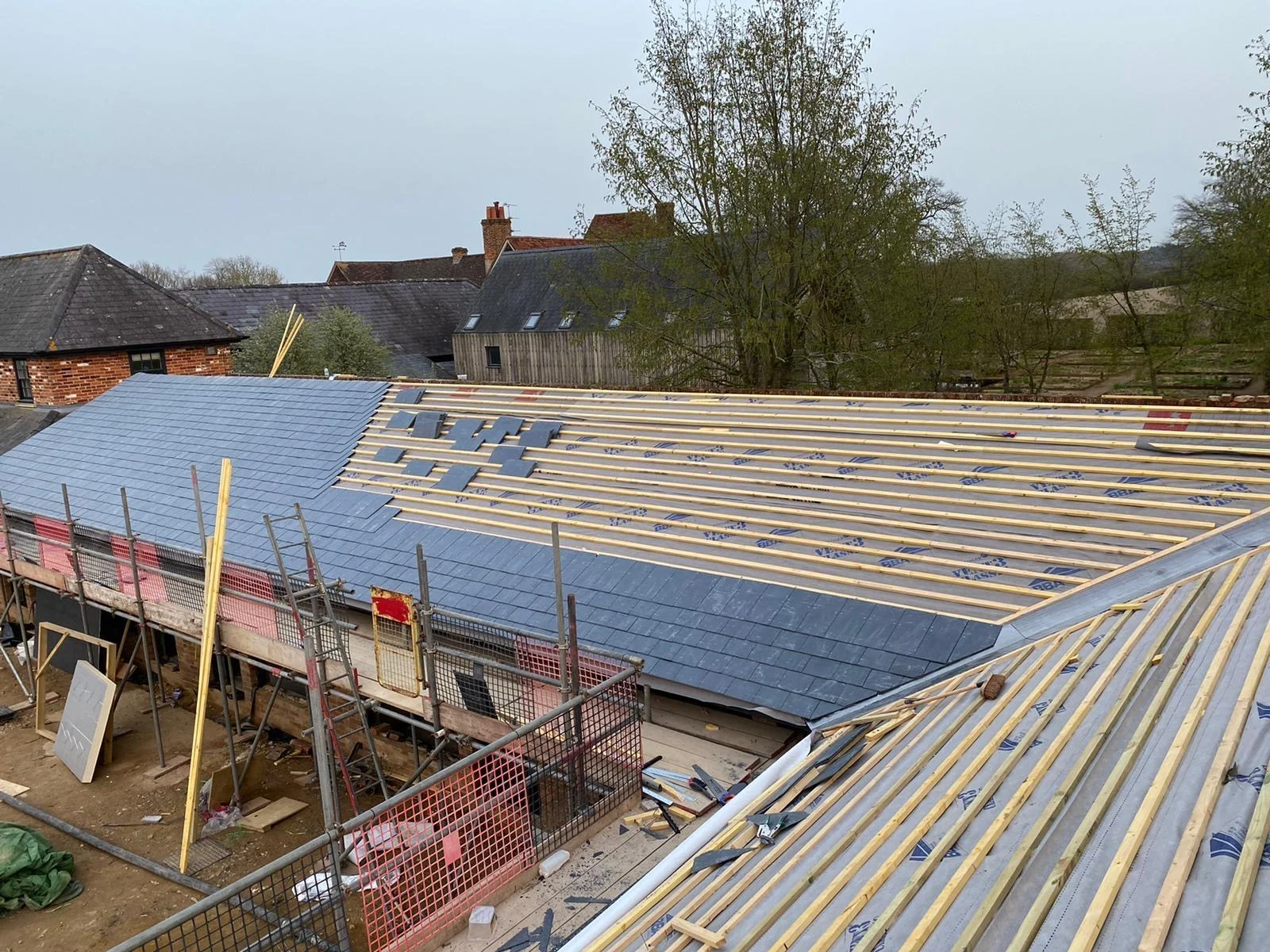
Key Components of Flat Roof Construction
-
Decking/Base Layer
The decking forms the structural base of the flat roof and is usually made from timber, concrete, or metal. The choice of material depends on the building’s design and usage. This layer must be strong enough to support the roofing materials and any additional loads such as foot traffic or rooftop installations. -
Vapour Control Layer (VCL)
A vapour control layer is installed to prevent moisture from the inside of the building rising and condensing within the roofing layers. It helps to maintain the thermal performance and integrity of the insulation and structure. -
Insulation
Insulation is essential in flat roofing to achieve energy efficiency and compliance with UK Building Regulations. Common materials include PIR boards, mineral wool, or EPS boards. Insulation may be installed above (warm roof), below (cold roof), or between the structural deck layers. -
Waterproofing Membrane
This is the most critical layer in flat roofing. It prevents water ingress and protects the structure from damage. Options include:-
Built-Up Felt (BUR): Layers of bitumen felt bonded together.
-
Single-Ply Membrane: Includes materials like EPDM (rubber), TPO, or PVC.
-
Liquid Roofing: Cold-applied liquid systems that cure to form a seamless barrier.
-
GRP (Glass Reinforced Plastic): Durable and often used for domestic flat roofs.
-
Mastic Asphalt: A traditional waterproofing method known for longevity.
-
-
Drainage and Falls
Although termed "flat," these roofs must have a gradient to allow rainwater to flow to drainage outlets. Proper design includes internal outlets, scuppers, or perimeter gutters to avoid ponding water. -
Protective Finishes
In some installations, protective layers such as gravel ballast, paving slabs, or green roof systems are applied. These protect the waterproof membrane from UV radiation and mechanical damage.
Types of Flat Roofing Systems
Cold Roof Construction
The insulation is placed between the joists below the roof deck. It’s essential to include proper ventilation to prevent condensation.
Warm Roof Construction
The insulation is laid above the deck and beneath the waterproof layer, making it more thermally efficient and eliminating the need for ventilation.
Inverted Roof Construction
The waterproofing membrane is applied directly onto the structural deck, with insulation and ballast layers placed above. Common in commercial applications.
Advantages of Flat Roofing
Cost-Effective: Requires fewer materials and simpler installation compared to pitched roofs.
Usable Space: Ideal for rooftop gardens, HVAC units, or solar panels.
Modern Aesthetic: Clean lines that suit contemporary architectural styles.
Ease of Access: Simplifies maintenance, repairs, and inspections.
Challenges and Considerations
Cost-Effective: Requires fewer materials and simpler installation compared to pitched roofs.
Usable Space: Ideal for rooftop gardens, HVAC units, or solar panels.
Modern Aesthetic: Clean lines that suit contemporary architectural styles.
Ease of Access: Simplifies maintenance, repairs, and inspections.
Call us: 020 3665 222 / 07359905429
Conclusion
Flat roofing construction, when executed with the right materials and professional techniques, offers a durable, cost-effective, and versatile solution. Whether for a domestic extension, commercial property, or industrial unit, flat roofs continue to be a practical and stylish choice in modern construction. Regular maintenance and proper installation are key to ensuring long-term performance and weather resistance.
20+ Years of Experiences
100% SATISFACTION GUARANTEED
Highly Rated & Reviewed
QUALITY MATERIALS
Send Richmond Roofing Group a Message
Fill out the form below to book an appointment with one of our roofing specialists. We look forward to serving you!